

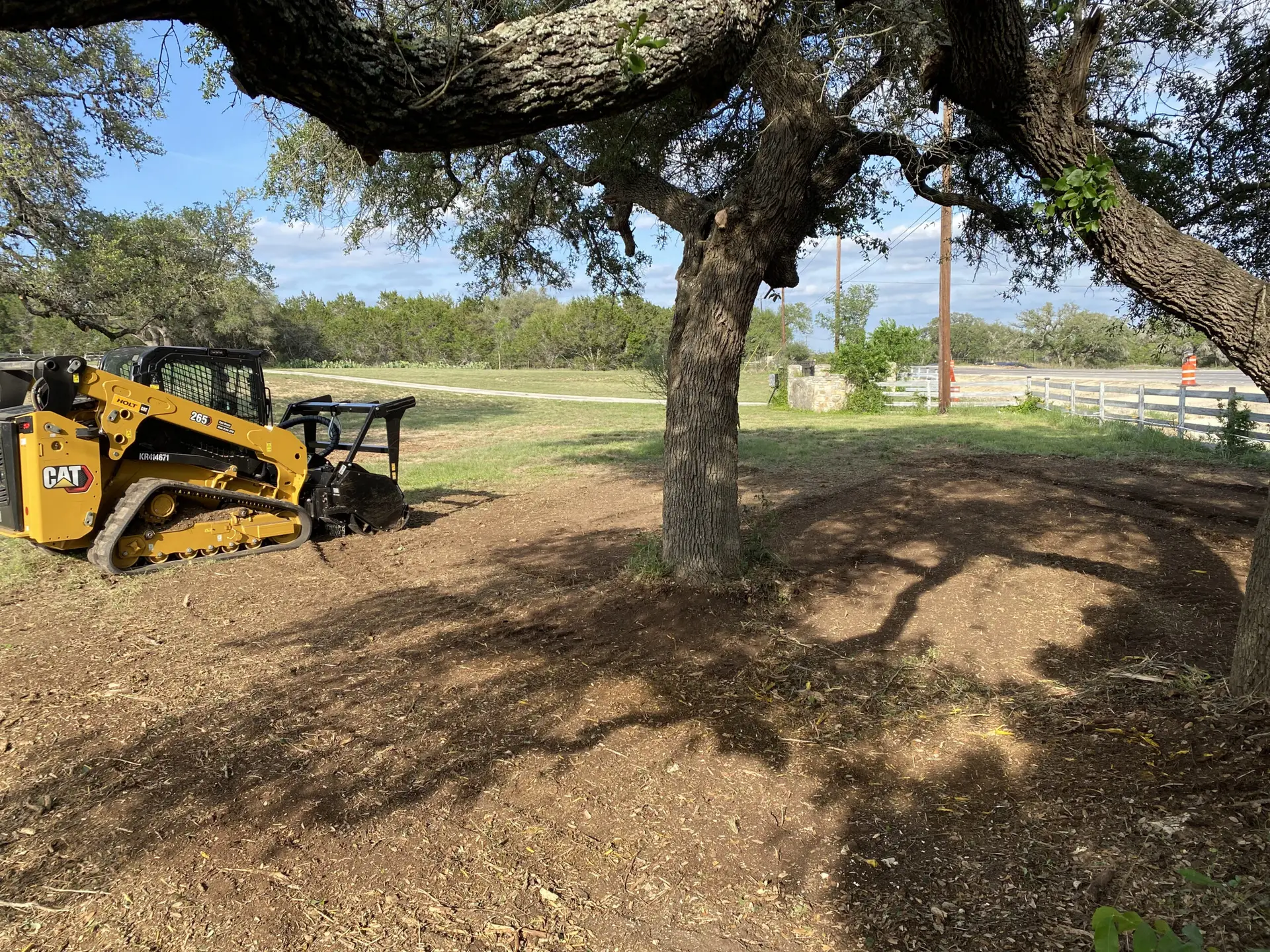
Land clearing in the Texas Hill Country costs more than most online estimates suggest, and the reason has nothing to do with the size of your property. It comes down to what’s actually growing on it and what’s hiding underneath. Cedar density, rocky caliche soil, and tree size all change the price and the timeline. Before you call anyone for a quote, here’s what actually drives the cost — and how a federal grant deadline this summer could cover up to $6,000 of it.
Most land clearing guides treat every acre the same. They give you a flat per-acre price and call it a day. That’s not how it works once you’re standing on Hill Country ground. A flat pasture in Guadalupe County clears differently than a cedar-choked slope in Blanco County, and a contractor who hasn’t worked this specific terrain will either underbid the job or overbuild the equipment list. We’ve walked enough properties around Fischer, Texas to know the difference before we ever fire up a machine.
What Makes Hill Country Land Clearing Different
Three things separate land clearing here from land clearing almost anywhere else in Texas: the cedar, the caliche, and the slope. Each one changes how a job gets bid and how long it takes.
Cedar Density Drives the Timeline
Ashe juniper, what most locals just call cedar, doesn’t grow in neat rows. It spreads thick and fast, choking out native grasses and oak seedlings. A half-acre that looks “lightly wooded” from the road can hide three times the vegetation once you walk it. That’s why we never quote a job over the phone. We walk every property first.
Did You Know? Cedar can pull more groundwater from the soil than native grasses and oaks, which is part of why Texas A&M Forest Service treats heavy cedar cover as a wildfire and water resource concern, not just a landscaping issue.
Caliche Soil Changes the Equipment Needed
Underneath a lot of Hill Country lots sits a layer of caliche, a hard, chalky limestone deposit that can stop a standard dozer blade cold. It doesn’t affect every job, but when it shows up, it changes what equipment makes sense and how fast the crew can move.
Slope and Drainage Affect Access
Rolling terrain means equipment access routes have to be planned, not assumed. A property with a steep entry point takes longer to stage than a flat one, even if the total acreage is identical.
How The Mulching Marine Approaches a Hill Country Job
We run a skid steer fitted with a forestry mulching drum attachment on every land clearing job. Instead of pushing trees and brush into a pile that has to be hauled off, the drum grinds vegetation into mulch that stays on the property. That mulch breaks down over time, holds moisture in the soil, and cuts down on erosion, which matters a lot on sloped Hill Country lots where bare dirt washes out fast after a hard rain.
Pro Tip: If erosion control matters to you, ask your contractor whether they mulch in place or haul debris off-site. Left-in-place mulch acts like a protective layer over exposed soil until grass or ground cover comes back.
Before any equipment touches your property, we walk it with you. We look at tree size, density, and what you actually plan to do with the land once it’s clear — whether that’s building, expanding pasture, or just making the property usable again. A lot of customers come to us wanting the invasive mesquite and dead cedar gone while keeping their mature oaks and pecans standing. That’s a conversation that has to happen on-site, not over a phone quote.
What Drives Land Clearing Costs in Texas
Search for “land clearing cost per acre” and you’ll find a dozen sites quoting a single flat number. The honest answer is that price depends on four factors working together.
| Cost Factor | Why It Matters |
| Vegetation density | Thick cedar stands take longer to clear than scattered brush |
| Tree size | Large hardwoods require different equipment than saplings |
| Terrain and slope | Steep or rocky access slows staging and machine movement |
| Acreage | More land generally means more time, but density matters more than size alone |
A small, densely wooded residential lot can sometimes cost more per acre to clear than a larger, more open tract. That’s the opposite of what most online calculators assume, and it’s why we give every customer a walkthrough instead of a guess.
A Grant That Could Cover Part of Your Project This Summer
Here’s something most land clearing content won’t tell you because it’s specific to this exact moment. The Texas A&M Forest Service is currently accepting applications for its Mechanical Fuel Reduction Grant, available to landowners in qualifying counties dealing with cedar and heavy underbrush, and the 2026 application window closes July 14.
The grant can reimburse up to $2,000 per acre toward forestry mulching work, capped at $6,000 per property, for landowners in qualifying counties including Comal, Hays, Blanco, and several others across the Hill Country region. To qualify, your property generally needs at least one acre of heavy brush, cedar, or fuel load, and needs to sit inside or near a recognized wildfire risk area.
Did You Know? Grant funding for this program goes specifically to mechanical clearing methods like forestry mulching rather than burning, because mulching eliminates the smoke, hauling, and fire risk that come with pile burns.
We’re a grant-ready contractor for this program, which means our equipment and process already meet the inspection requirements, including the 66-foot minimum fuel break spacing the grant calls for. If you’ve been putting off clearing because of cost, this window is worth a phone call before it closes.
Permits and What Comes After Clearing
Permit rules vary by county and city, so the requirements on a property in Comal County won’t necessarily match Hays or Bexar. We always recommend checking with your local county office before work begins. Once your land is clear, most property owners move into a follow-up phase such as rock milling for surface caliche, build site preparation for new construction, or driveway and trail clearing for access. Knowing what’s next helps you plan the budget and timeline for the whole project, not just the first step.
Frequently Asked Questions
How much does land clearing cost per acre in Texas Hill Country?
There’s no single flat rate because cedar density, terrain, and tree size all change the price more than acreage alone. A densely wooded small lot can cost more per acre than a larger, open tract. The only reliable way to get an accurate number is a property walkthrough.
Do I need a permit to clear land in Texas?
Permit rules depend on your county and municipality, so requirements vary across the Hill Country. Check with your local county office before starting any clearing project. We can share general patterns we see, but we don’t provide legal or permitting advice.
What is forestry mulching and how is it different from clearing with a dozer?
Forestry mulching uses a drum attachment to grind brush and trees into mulch that stays on the ground instead of being piled and hauled away. It causes less soil disturbance than dozer work and leaves behind organic material that helps reduce erosion.
Can I get financial help for land clearing in Texas?
Yes, if your property qualifies. The Texas A&M Forest Service Mechanical Fuel Reduction Grant can reimburse landowners in eligible counties up to $6,000 for forestry mulching work, with applications accepted through July 14, 2026.
Will clearing my land damage the soil long-term?
Forestry mulching is one of the gentler clearing methods available because it avoids deep soil disturbance. The mulch left behind on the ground helps retain moisture and slow erosion as the area recovers.
Get Your Property Walked and Quoted
Land clearing in the Hill Country isn’t a one-size-fits-all job, and the contractor who treats it that way is the one who gets your price wrong. Cedar density, caliche, and slope all factor into what your project will actually take, and the only way to know for sure is a walkthrough of your specific property.
With the Texas A&M Forest Service grant window closing July 14, now is the time to act if you’ve been putting off a clearing project. Contact us today for a complimentary quote and to find out whether your property qualifies for grant funding.